5 Best Tips: Ultimate Minneriya Elephant Safari Guide for 2026
If you are planning an unforgettable wildlife adventure in Sri Lanka, finding a reliable minneriya elephant safari guide is the first step to experiencing one of the world’s greatest natural wonders. Minneriya National Park is world-famous for sheltering massive herds of Asian elephants, especially around the ancient reservoir.
To help you plan a smooth, ethical, and highly rewarding journey, we have put together this practical handbook containing insider strategies, seasonal schedules, and photography tips.
Table of Contents
- Why Minneriya is Famous: The Elephant Gathering
- Best Time to Visit Minneriya National Park
- Choosing an Ethical Private Safari Provider
- What to Bring & What to Wear
- Frequently Asked Questions
1. Why Minneriya is Famous: The Elephant Gathering
The primary reason travelers search for a trusted minneriya elephant safari guide is to witness “The Gathering.” This is not just a standard wildlife viewing; it is recognized as one of the largest wild Asian elephant gatherings on Earth.
Unlike captive setups, here you see massive families, playful calves, and majestic matriarchs interacting in their natural habitat. The park’s unique dry-zone ecosystem spans over 8,800 hectares, providing a lush sanctuary for deer, leopards, and over 170 species of exotic birds alongside the elephants.
2. Best Time to Visit Minneriya National Park
Timing is everything when planning your itinerary. While elephants can be spotted year-round, the absolute peak season falls during the dry months.
- Peak Months (June to September): Water levels in the surrounding jungles drop, forcing over 300 elephants to migrate toward the historic Minneriya Tank. This is the optimal time for photography.
- Alternative Season (October to May): If water levels rise due to monsoons, herds often temporarily shift to nearby Kaudulla National Park or Hurulu Eco Park. A quality local tracker will know exactly where the herds are on your specific travel date.
3. Choosing an Ethical Private Safari Provider
Responsible wildlife tourism ensures these beautiful creatures remain undisturbed. When selecting your tour operator, prioritize companies that practice conservation-first tracking.
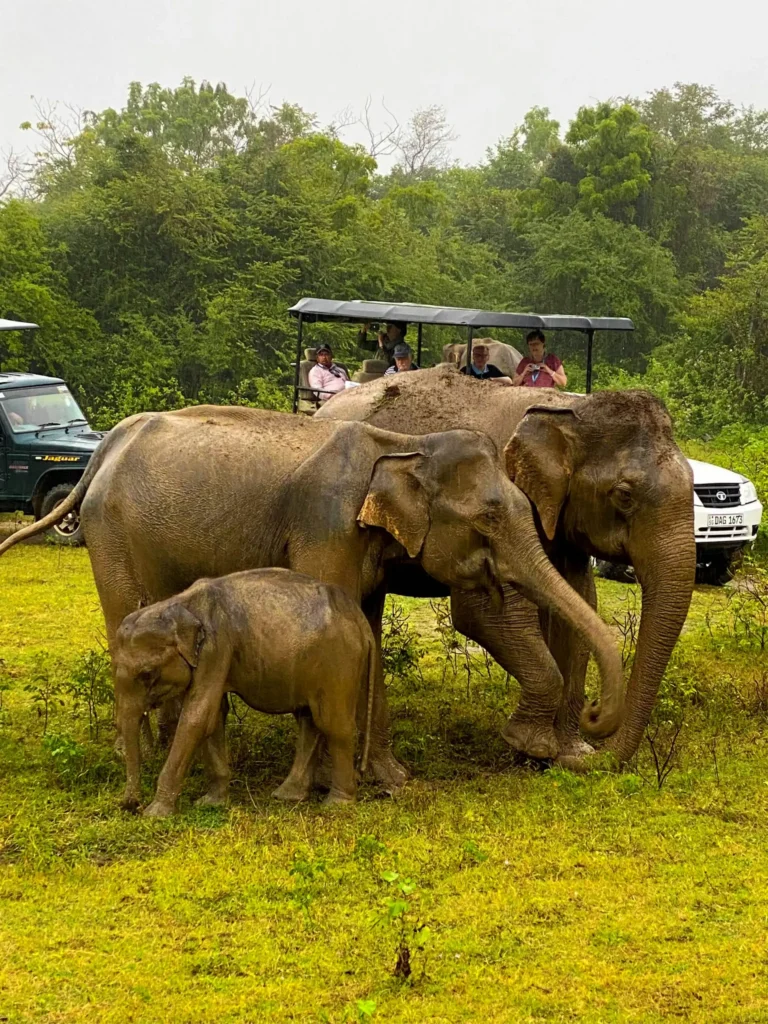
An ethical team will always maintain a safe distance of at least 20-30 meters, turn off the jeep engines when observing quiet behavior, and strictly follow the national park’s speed limits. Avoid operators who crowd or chase animals for cheap photo opportunities.
4. What to Bring & What to Wear
To maximize your comfort during a 3 to 4-hour rugged drive through the dry mixed evergreen forests, follow this quick preparation checklist:
- Clothing: Wear lightweight, breathable, neutral-colored clothes (khaki, beige, olive green). Avoid bright neon colors that might startle wildlife.
- Gear: Bring a DSLR camera with a decent zoom lens (200mm or higher) to capture crisp close-ups from a respectful distance.
- Protection: Pack eco-friendly sunscreen, a wide-brimmed hat, polarized sunglasses, and reliable insect repellent.
5. Frequently Asked Questions
- How long does a standard tour take? Most private safaris last between 3 to 4 hours, which includes park entry handling, tracking time, and scenic stops.
- Are afternoon or morning tours better? Afternoon safaris (starting around 2:30 PM) are highly recommended because elephants come out of the deep shaded woods to drink and bathe as the temperature cools down.
For official updates on park preservation rules and entry fees, you can check the Sri Lanka Department of Wildlife Conservation database. If you want to view real-time traveler reviews from thousands of happy global adventurers, visit the TripAdvisor Sri Lanka Travel Forum for crowdsourced tips.
Ready to book your ultimate adventure? Explore our premium, all-inclusive Habarana Jeep Safari Packages and secure an expert local guide today via WhatsApp!

Written by Samitha Nirmal
Safari guide and wildlife enthusiast at King Lakeside Jeep Safari Habarana. Passionate about sharing the incredible wildlife of Sri Lanka with travellers from around the world.